The answer is very simple: it depends!
If you are a „classical“ thru-hiker who has done trails like the PCT or AT etc. You will be disappointed. Though there are some stretches where you have no infrastructure and some wilderness, it is very different. The Michinoku is very new (it only opened in 2019) and Japan has no tradition of modern thru-hikes.
The people who take care of promoting it and offering information in different places on the trail are amazing. But there are a lot of obstacles in terms of trail maintenance, the biggest being money and that really makes this trail an adventure in itself.
Long stretches are on roads and can be quite disheartening.

If you are looking to connecting with nature, this is the wrong trail for you!
But if you are interested in getting to know more rural areas of Japan and connect with people this might be a good choice.
Depending on your fitness level it can take you as long as nine weeks if you are only hiking.
Some areas are mellow and easy to hike, others are more like a rollercoaster on steroids. Step Aerobic could have been invented on this trail.
So, what to consider if you decide to hike the trail?
First of all have a look at this website:https://www.michinokutrail.com
It has all the information you need to get started and links to the official resources. Then make sure you get the paper maps. They are extremely important and helpful.
Start some trail fitness. I mean it, do not try to just do a 1000 m up and a 1000 m down in one day mainly steps without some training.
Decide on the season. I started at the beginning of September in the South. The most stupid decision ever. Too hot, too boring. September is for sure a good starting point but make sure you hike SoBo not NoBo.You will need a tent and a good sleeping system as well as a good backpack. You are carrying it for more than 1000 km. It should fit you well. I did some posts on gear, that might be helpful but using YouTube as a resource will be a good choice, too.
Should you be able to speak Japanese? It will help but if you use google translate or any app of your choice, it should suffice. One word of advise though, if you encounter ANY sign on the trail, make sure you check what it says. Sometimes it tells you that there is a road or trail closure. Or bears have been seen in that area. Ignoring it might be quite harmful to your health.
Talking of bears. I have been hiking the trail 2025. And during that time two or three people died of bear attacks in the area. And 60 something were attacked all over the country. A survey showed that the bears start coming closer to villages year by year. They have easy access to food and as the villages become more and more deserted, they are facing less danger to be hunted.
We are not talking Grizzlies but black bears. Though, with the wrong behaviour they are not less dangerous. Sometimes the warning signs are very clear and you can find advise on how to behave.
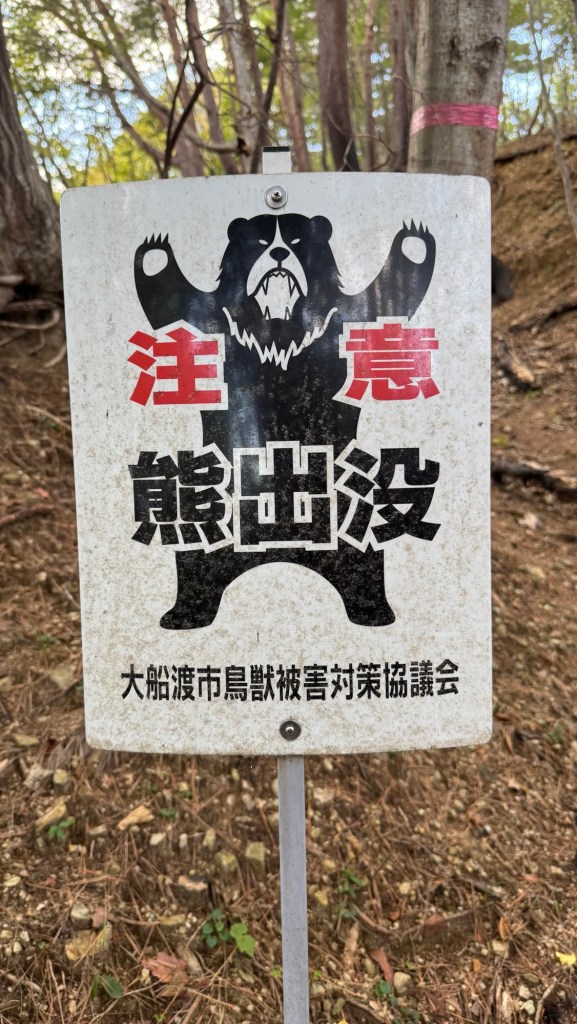
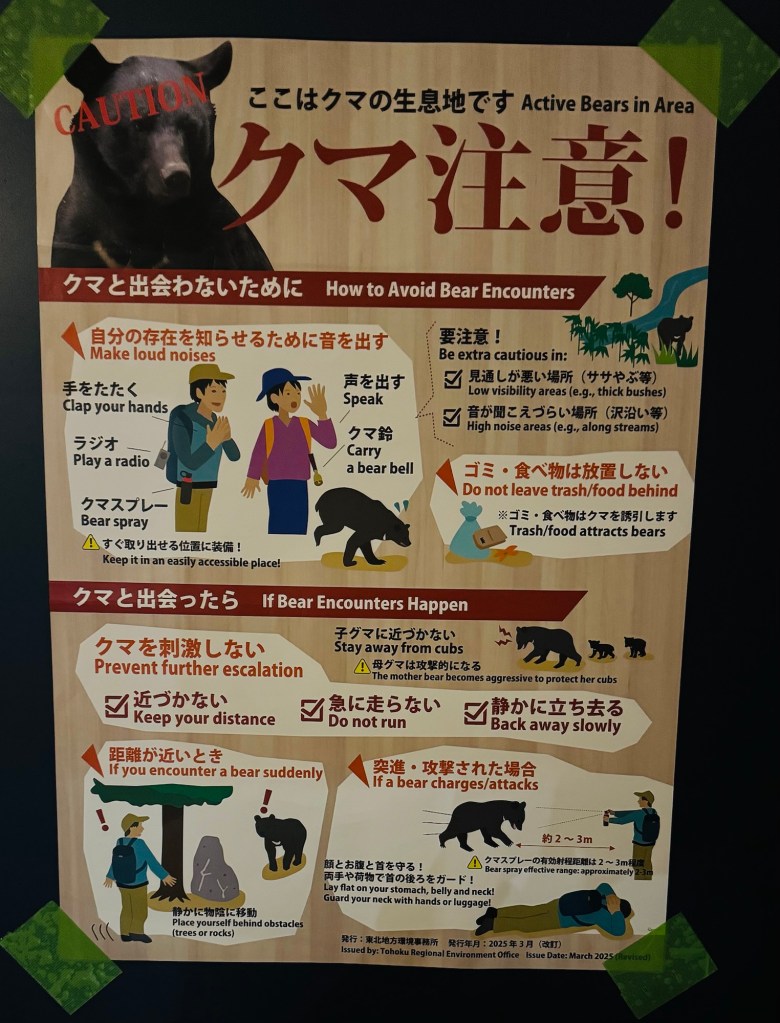
Sometimes it is just a handwritten sign that says クマ.
Also get yourself a bear bell. Especially when you are hiking on your own.

Another rather annoying animal are leeches. Some areas are full of them and I caught a few not really knowing how. The first time I realised that I was dinner for a little sucker, I kind of ripped it off and that made it worse. If they do not let go by themselves, they basically poop into your blood which leads to swelling and sometimes pain. Also the blood will just keep running for quite a while.
Best advice I got was to put salt on them. Since then I am always carrying a small package of salt in my hip belt and it served me well! But they are really sneaky!
What do you need to take on the trail?
Basically everything you would on any other trail but you will not be in the “wilderness” for more than two days.
For more practical advice have a look at my gear entries and tips for travelling in Japan.
One thing that I think is important to keep in mind is the fact, that the area you are hiking in, often has been completely destroyed and it still shows. Not because of the debris that is still there, but because of the emptiness in places, and people still hurt. I hardly ever started the conversation about the catastrophe but sometimes people would, and it shows the big holes that have been ripped into the life of that roughly 1000 km long stretch of coast.
For me personally it was at times overwhelming to imagine and understand what it means. But one thing that the Michinoku brings to the area is tourism and with that hopefully new businesses and initiatives to revive the coastline, will emerge.
And last but not least make it your trail, which might involve cutting out some of the stretches or taking a train and bus from time to time, even choosing a different route can make all the difference.
 One Year - Five Continents