It might be coincidence, that I finish writing this blog post in a hotel instead of my tent with a view of the Pacific Ocean. Today I had to change my plans all over. I was supposed to make my way to the Natori Trail Centre by foot and partially train as I wanted to avoid walking by Sendai Airport.
If a breakfast is not included in the place I stay at, I normally get something at a seven eleven of Lawson. Then I find a nice place with some shade and have my breakfast and lots of liquid in order to stay hydrated at 32 degree Celsius. Same today, until an announcement via speakerphone in the park where I had my breakfast. It was something about an earthquake off the coast of Fukushima, which is not that far away from where I am at the moment, at least in the big scheme of things. And then came the dreaded word tsunami… The second time it was announced I was able to focus on the other information, that activities in the proximity of the coast should be avoided.
Hell, what is proximity? 1 km, 5 km?
In the park itself, that is inland, no one panicked and I decided to first check all my apps to get a better picture. No warning there… In the end I still made up my mind, that I will not sleep a few meters from the ocean but book a hotel inland.
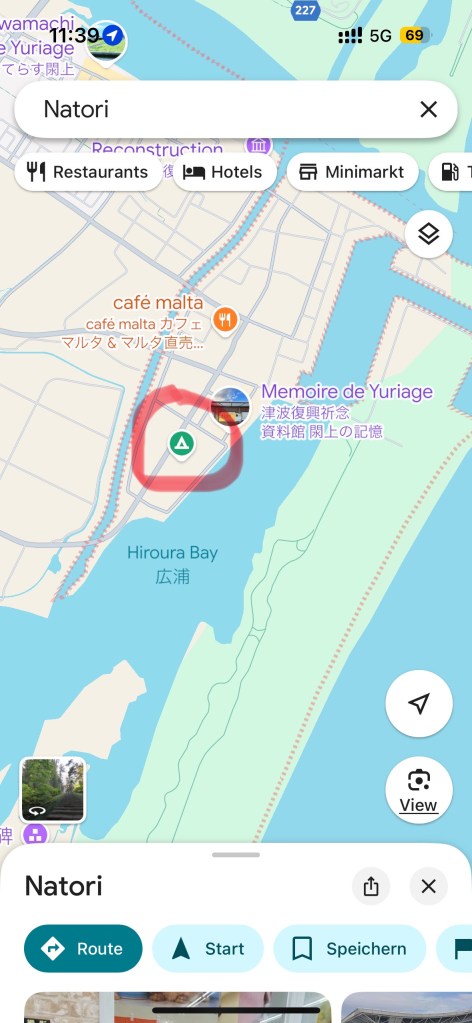
I speak and understand Japanese. What if someone who is oblivious walks potentially into a dangerous situation just because they have no clue…
Anyway, this is just the intro to a story I am sure has been shared many times orally, or in written form but I am convinced that it cannot be told often enough.
When we think of the catastrophe of 11.03.11 we mostly talk about Fukushima and the nuclear plant. Something that is often forgotten are the more than 20.000 people who lost their lives because of the tsunami. It followed the unbelievable strong earthquake which triggered the waves to roll onto the coast, into the land. Besides the people who died, hundreds of thousands of people were displaced and lost everything. Some were not allowed back to where they used to live. It is just too close to the waterline.
Even today there are people who have not been found.
Why am I telling you this? because in all that destruction and grief there are people who have survived, in the midst of the tsunami, mere 450 m from the coastline, physically unharmed.
On my second day of hiking instead of climbing a mountain in the rain I decided to take a shortcut and take my time visiting the Earthquake Heritage Site of Nakahama.
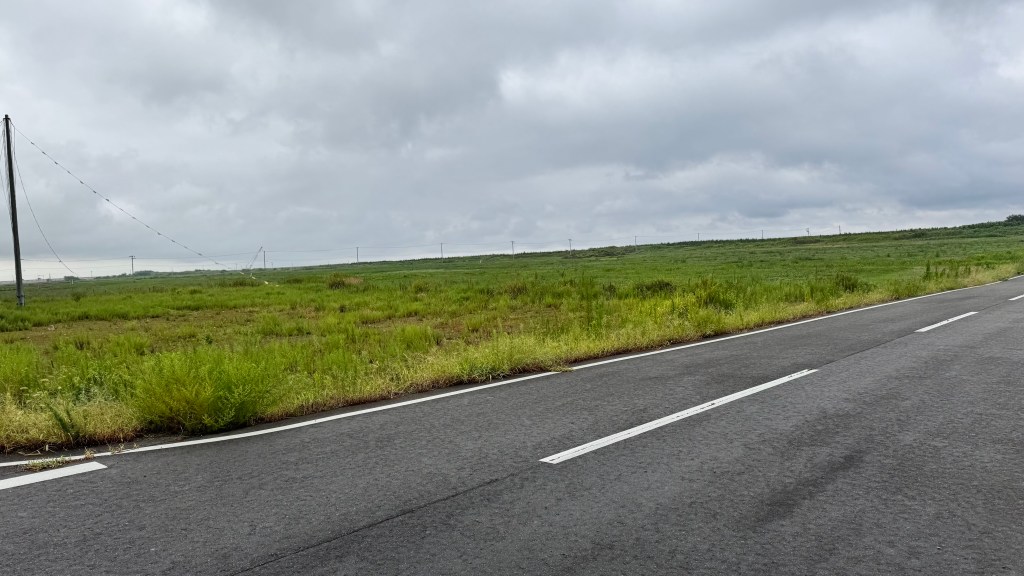
I was not really sure what to expect and while I walked a straight line towards it I was already impressed by the building, though surprised why a school would be build in the middle of nowhere… little did I know …

The school is even now an outstanding (literal sense of the meaning) and well thought through building. At the time it was build it was surrounded by a vibrant community, many houses left and right and though there were not that many children for the primary school it has been built with a purpose and love for material and detail, which can still be seen today. It even had a sports hall and a swimming pool!
Today there is nothing, except for he schools ruin
Because of a nearby river and the chance of flooding the base of the school was raised by two meters, to have some wriggle room in case of high waters. Each floor came up to the height of 4 meters. Which means that the ceiling of the second floor (in Japan the first floor is the German ground floor) was at 10 m. Keep that number in mind. Furthermore, there was something like an attic on top of the second floor around the courtyard in the middle of the school.
That area was only accessible by one small iron cast ladder.
At the time the earthquake hit (the magnitude was supposedly 9.0) everyone did what they are trained to do in the case of an earthquake. Hide under a table for safety. They did but the head teacher also started watching the news. And it became quite clear that a tsunami will hit the coast one way or another. According to the announcements rather sooner than later so that the chance to reach the next evacuation point in time was too small to risk it, and the principal ordered everyone to get up to the second floor. Which everyone who was in the vicinity did, students, teachers, support staff, everyone around the school grounds.
In the end it took longer until The tsunami came but the real game changer was that electricity was cut off in most places, except for the school, where it lasted until 15:19, just after the announcement that the waves will reach a height of up to 10 m.
The head teacher’s decision to get 90 people up that tiny staircase immediately, saved everyone’s life!
They spent a bitter cold night on concrete floor, no food,no water, and were rescued the next morning.
The devastation of the tsunami has been preserved as it was:

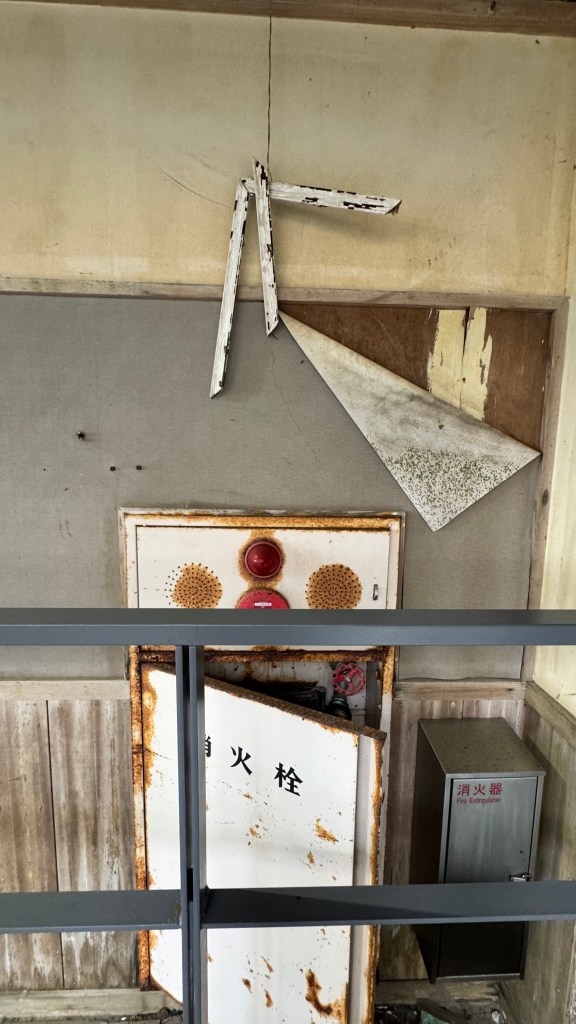
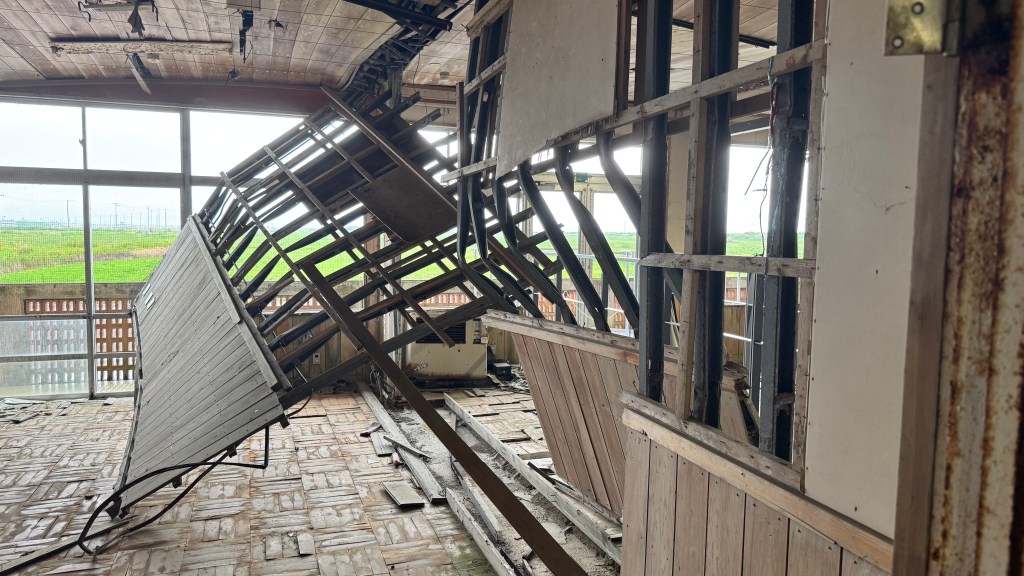
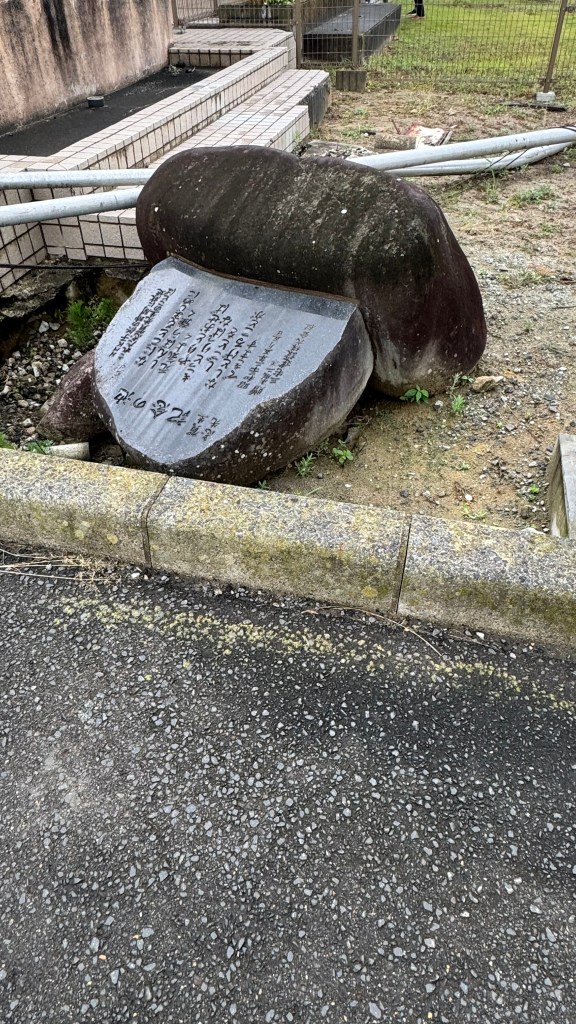
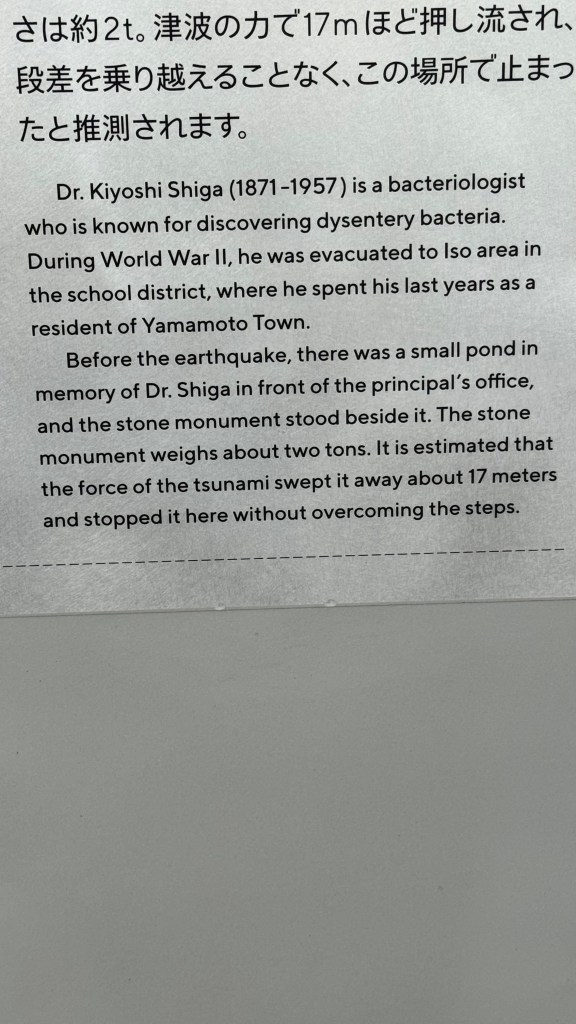
There are many more details that are worth telling, for example that some parts of the building were unharmed and even the windows stayed intact, but it would make this post just too long.

Let me just say, that the staff at this place is amazing. The way everything is set up, how they work with the visiting children and help visitors to understand the timeline and impact without creating a catastrophe voyeurism is incredible. I was so focused on what they told us and how, that I kind of forgot to take more pictures but I think the ones I post here give you an idea.
Being a teacher and former head teacher I teared up more than once, and admire that man for his decision making!
And one final thought: One of the people who works there told us that many of the children who are now in their twenties have chosen professions in which they can help people.
Pure luck or fate? Not something that has an easy answer.
 One Year - Five Continents